
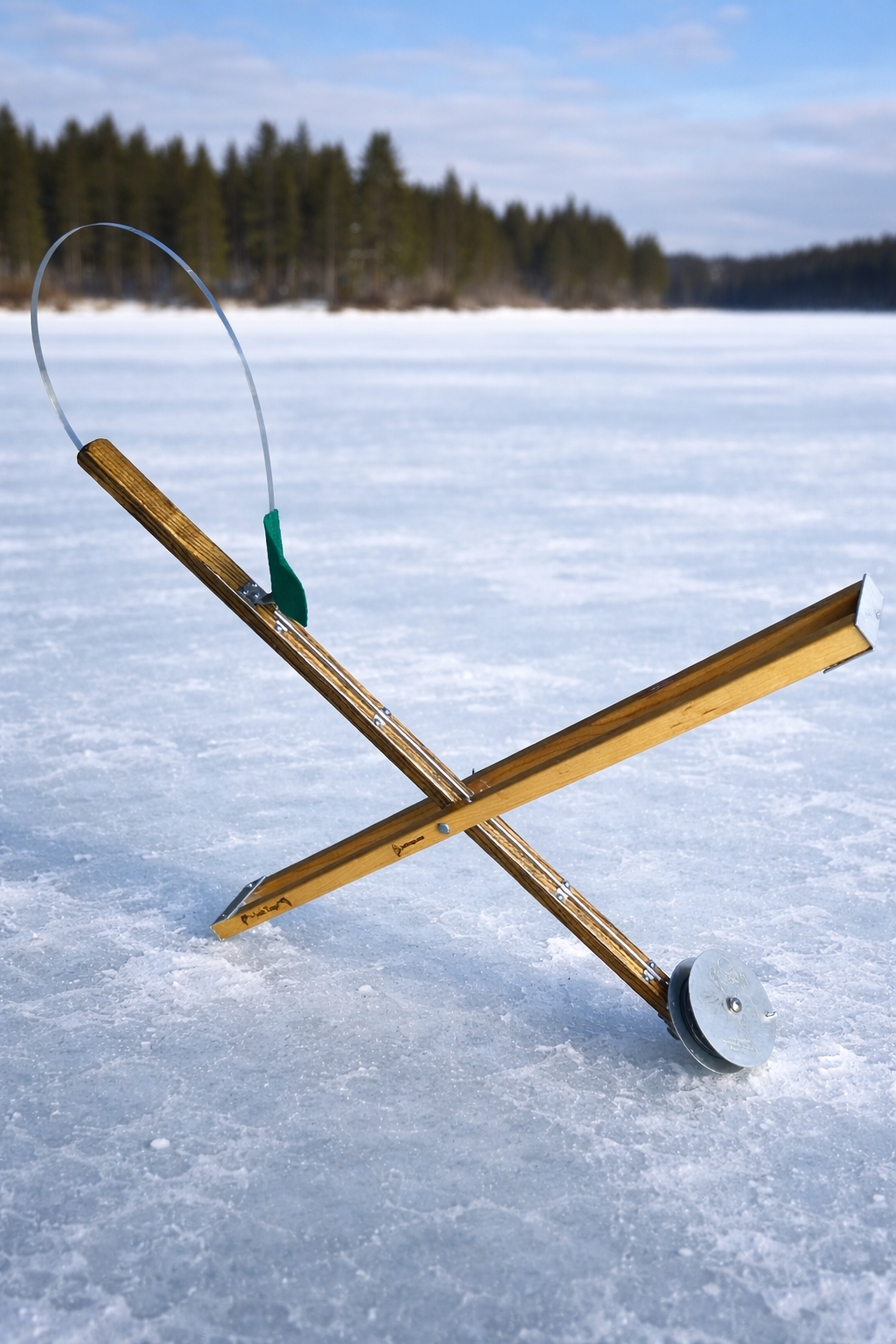
Ice fishing traps, also known as tip-ups, are a staple of winter fishing in Maine. They suspend a baited line below the ice and use a simple trigger and flag to signal a bite, allowing anglers to cover water, fish multiple depths, and target cruising fish efficiently.
There are many good ice fishing traps and trap makers out there, and plenty of designs that work well. For this article, I’m using the Jack Trap style as an example—not because it’s the only good option, but because it’s the one I know best. I’ve been fishing them for over 20 years, they meet everything I look for in a trap, and I’m still catching fish on my original set.
What Makes a Good Ice Fishing Trap
The Spool (Reel)
The spool is the most important part of a trap. I want as little resistance as possible. I don’t like drag systems—when fish feel resistance, they’re far more likely to drop the bait before you ever get to the hole.
If larger baits trip the flag, I’ll adjust the flag height or use a rubber band rather than adding drag. I prefer 4-inch aluminum reels over 3-inch reels because they spin smoother and hold more line. I’ve been spooled by pike and lake trout with smaller reels, and that extra capacity matters.
The reel also needs to be greasable to prevent freeze-ups. Jack Traps come pre-greased with an extreme-temperature grease and can be re-greased as they age.

The Trigger System
I prefer a wire trigger encased in a stainless tube. This style is extremely sensitive, easy to trip, and very consistent. That sensitivity helps reduce bait being ripped off on hard strikes and allows fish to move naturally with the bait.
Just as important, this trigger design is greasable, which helps prevent freeze-ups in cold, wet conditions. Sensitivity still has to be balanced with wind resistance—a good trigger should trip from a fish, not from gusts or changing weather.
The Flag & Visibility
Visibility matters more than color. Dark flags stand out well against snow, while red flags are easier to see when looking back toward wooded shorelines. Fluorescent flags can work, but at distance they sometimes blend into bright snow more than expected.
I do prefer taller traps. Extra height helps when running a wide spread and keeps flags visible in deeper snow.
I go with the 31″ standard with 4″reel as this is the biggest standard style on the jack traps website.
The Body & Frame
For the frame, I prefer hardwood construction. They’re heavier, but far more durable and built to last. Cross-style traps offer better stability in heavy wind, but I prefer standard traps for easier storage and faster setup.
When setting traps, I always face the reel into the wind so if the trap tips, the post rests against the side of the hole instead of pulling the reel.
Simple, Proven Design
The best ice fishing traps don’t rely on gimmicks. Smooth spools, sensitive triggers, solid frames, and simple mechanics just work. My Jack Traps have lasted over 20 years because they’re built right—and that’s exactly what you want when winter conditions get tough.
If you have any questions about ice fishing gear or getting set up, feel free to shoot me an email, text, or give me a call. I’m always happy to help point people in the right direction and get them dialed in for time on the ice.

Leave a Reply