
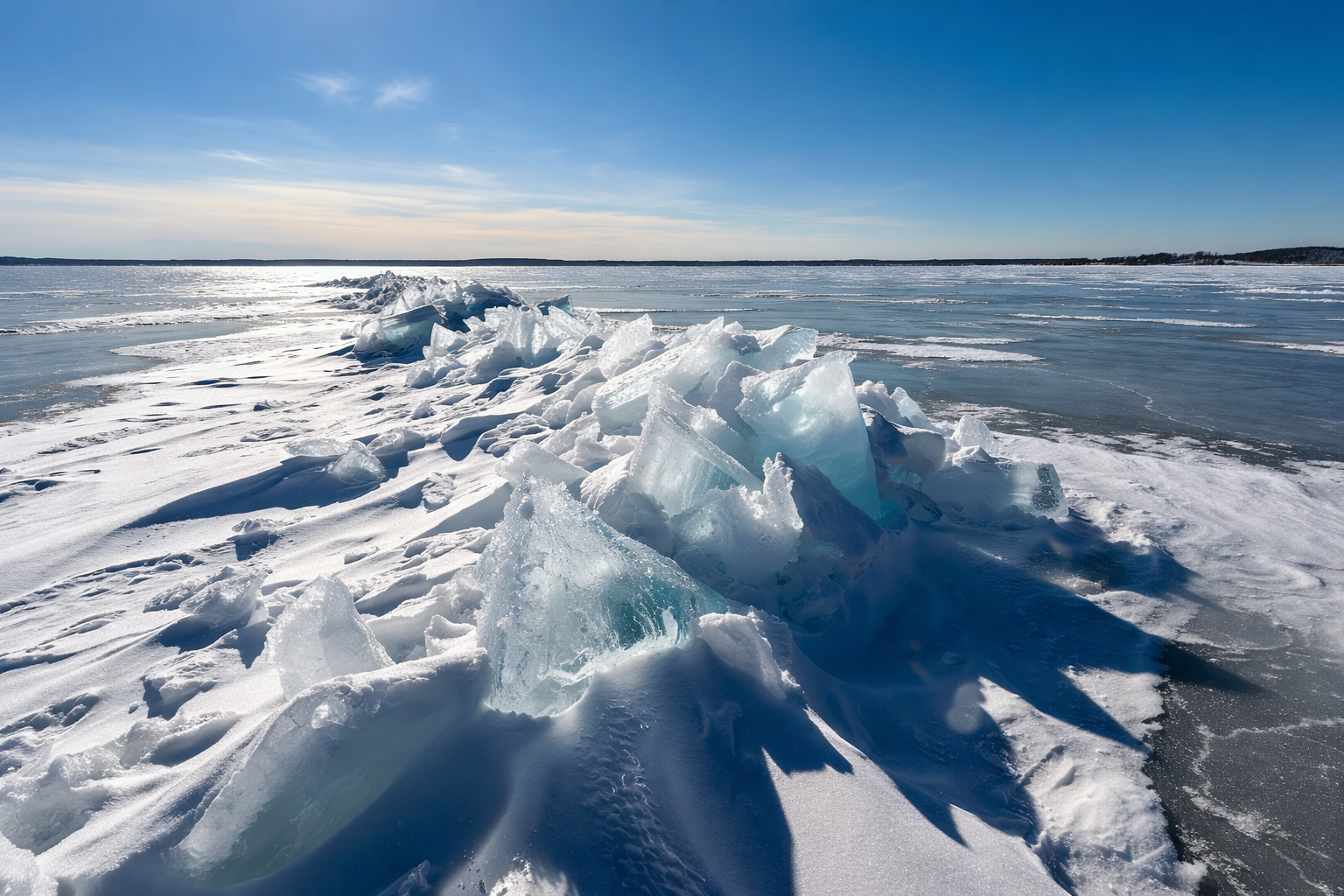
Every late winter, I start seeing pressure ridges show up on our local lakes. They seem to form in the same areas each year. Sometimes they stretch across the lake. Other times, they stack up along the shoreline. I’ve walked around them plenty of times, but I never fully understood what they were or why they formed. So, I did some digging. What I found felt worth sharing. It is especially important for the safety of ice anglers, snowmobilers, and anyone recreating on the ice.

How and Why?
A pressure ridge forms when large sheets of lake ice expand, shift, and press against each other. Ice expands and contracts with temperature swings. This is especially true in late winter. Sunny days are followed by bitter cold nights. When that movement has nowhere to go, the ice buckles and fractures. Slabs are forced upward into those jagged ridges we see on the surface. Lakes have natural stress points, like narrow sections, points, shorelines, or areas with current. These ridges often show up in the same spots year after year.
Aerial Photo of Sebec Lake | Courtesy of Christopher Arno
Are they Dangerous?
So how should we treat pressure ridges? With respect. For ice anglers, they’re something to navigate carefully. For snowmobilers — especially at night — they can be extremely dangerous. Hitting one at speed can feel like running into a wall. Some riders have been launched off machines because of it. In some cases, open water can form where the ice has separated, even if everything around it looks solid. Often you can keep your distance and travel parallel to a ridge. This can help you find a lower crossing point. Still, this is not always possible. Every ridge is different, so slow down, assess the area, and use caution before crossing. My best advice is simple: keep a safe distance and don’t assume the ice is the same on both sides.
I love late-season ice fishing in Maine. Still, pressure ridges are a good reminder that the lake is always moving. It moves even when it looks locked up solid. If you are ever in doubt, go with someone who knows the lake and is on the ice often.

Leave a Reply