
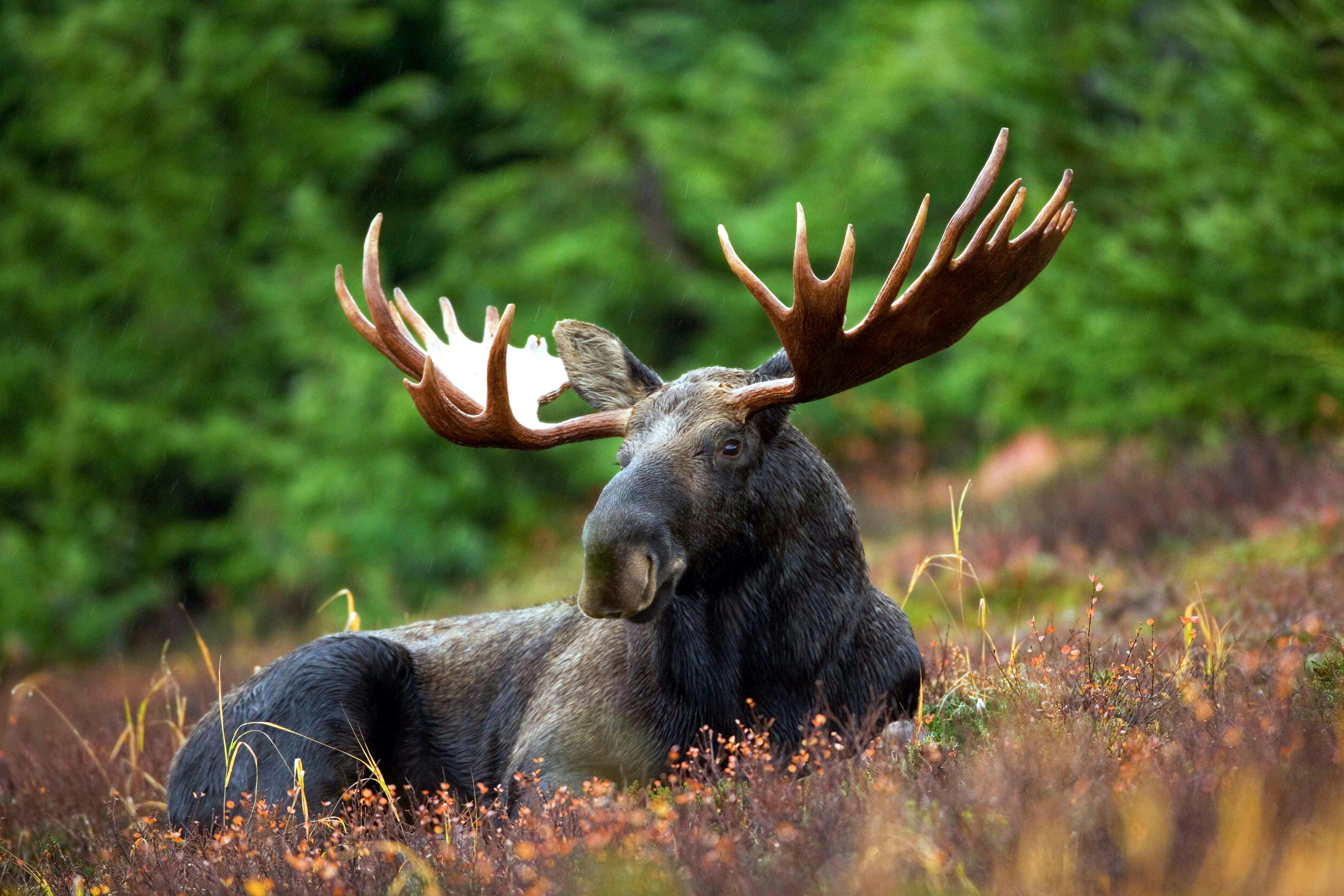
Two things almost every visitor traveling to Maine hopes to experience are seeing a moose and eating a lobster roll. As a guide in Maine, I hear this from clients all the time. In this article we’ll focus on the first goal—spotting a moose in the wild. (Don’t worry, the lobster roll guide is coming soon.)
So where are the best places to see a moose in Maine?
Before we talk about the best places to spot a moose, it helps to understand where they are less commonly seen. Many—if not most—of my fishing clients ask where they might see a moose while visiting the Bangor or Downeast areas. The unfortunate truth is that sightings in these areas are not very common. While it is certainly possible, the moose population is much lower in central, southern, and midcoast Maine. Moose tend to prefer forested mountains, wetlands, and remote areas away from people and development. In fact, I can only think of about six times in my lifetime that I have seen a moose in these regions. The good news is that several excellent places to see moose are within a couple hours’ drive from almost anywhere in Maine.

A Couple Really Good Spots to See Moose in Maine
If you are willing to drive a bit outside the Bangor and Downeast areas, there are a few places in Maine where moose sightings are much more common.
The Katahdin Region (Millinocket and Baxter State Park Area)
The Katahdin region is one of the best areas in Maine to see a moose. The forests, wetlands, and quiet roads surrounding Baxter State Park create excellent habitat. One stretch that has been especially productive in my experience is Route 11 between Brownville and Millinocket. The road passes through miles of wetlands, ponds, and regenerating forest—exactly the type of terrain moose prefer. In fact, one Mother’s Day my wife and I drove that stretch and counted twelve moose in a single trip.
Another area worth exploring is the Golden Road heading toward Baxter State Park. This remote logging road runs through miles of prime moose habitat, but visitors should understand that it is mostly dirt and actively used by logging trucks. A vehicle with good tires and adequate clearance is recommended.
View the Route 11 drive from Brownville to Millinocket →
View the Golden Road heading toward Baxter State Park →
The Moosehead Lake Region
The Moosehead Lake region is another solid area to see a moose in Maine. From Greenville, you can head north along either side of the lake. Lily Bay Road follows the east shore toward Lily Bay State Park, and Route 15 runs north through Rockwood. If you keep following Route 15, you can take it all the way to Jackman. That entire drive has the potential for moose sightings, and it’s a nice ride along Moosehead Lake before eventually following the Moose River.
Another place worth checking is around the Greenville Municipal Airport, where the marshy areas nearby often attract moose. From there, the Katahdin Iron Works Road heads east into more remote country. It’s a dirt logging road but generally well maintained. The road travels through miles of good moose habitat on the way toward the historic Katahdin Iron Works area.
View the Route 15 drive from Greenville to Jackman →
View the Route from Greenville to Brownville via the KI rd →
View the Lily Bay Road drive from Greenville to Lily Bay State Park →
Rangeley and Western Maine
Western Maine around Rangeley is another strong area for moose sightings. Route 16 runs through some excellent habitat in both directions. Heading north from Rangeley toward Eustis and Stratton takes you through miles of forest and wetlands where moose are often seen along the road. If you head the other direction toward the Maine–New Hampshire border, Route 16 follows the Magalloway River through classic moose country.
My family actually had a camp in this area when I was growing up. I remember always watching the roadsides for moose on the drive to camp. One night we counted eighteen of them along the way. From camp, my parents would sometimes take us out at dusk on what we called “moose rides,” slowly driving the nearby roads just to see how many we could spot.
View the Route 16 drive from Wilsons Mills to Eustis and Stratton →
Best Time of Day and Season to See Moose
Moose can be seen any time of year in Maine, but spring through fall tends to offer the best opportunities. Early morning and evening are usually the most productive times, when moose are more active and often feeding near roads or wetlands.
During the heat of the day—especially in the summer—moose often move into ponds, marshes, and bogs to cool off and feed on aquatic vegetation. This can be a good time to take a short hike into a wet area where moose are known to spend time.
Just remember to keep your distance. Cows with calves in the summer and bulls during the fall rut can be unpredictable and should always be given plenty of space.

Tips from Real Experience
- If you’re serious about seeing a moose, a few simple habits can improve your chances. First, bring binoculars. Moose can blend in surprisingly well with the woods, and binoculars make it much easier to scan wetlands and forest edges.
- Drive slowly and pay attention near clear cuts, marshes, and pond edges. One trick is to look carefully toward the wood line for large dark shapes. Often what looks like a black spot in the brush turns out to be a moose standing just inside the trees.
- Slow driving is also important for safety. Hitting a moose can be extremely dangerous because of their long legs. In many cases the body ends up coming through the windshield. For that reason, I generally recommend traveling moose country in an SUV or pickup truck rather than a low car.
- If you do spot a moose, stay in the vehicle whenever possible. It keeps you safe and avoids stressing the animal. If you decide to step out for a better look or a photo, keep plenty of distance. A telephoto lens is very helpful for wildlife photography.
- During the fall rut, calling can sometimes produce exciting results. In open areas or clear cuts, a simple moose call may get a bull to respond or even step out into the open.
- Finally, always respect the animal. If a moose shows signs of aggression or starts moving toward you, get behind a large tree. Moose do not see particularly well and are not very nimble around obstacles. Just make sure the tree is large enough—hiding behind a small sapling is not likely to help.

Leave a Reply